Living with tinnitus can be frustrating and overwhelming, and unfortunately, there is no cure for it. However, there are many management strategies that have proven to be effective. One such strategy is wearing hearing aids. These powerful devices aren’t just for hearing loss; they can also prove beneficial for the 25 million Americans who suffer from tinnitus. Here’s how.
Sound Masking
Sound masking, also called acoustic therapy, is a common management technique for tinnitus, and our specialists at San Diego Hearing Center are highly experienced in administering it. It involves using ambient noise, such as a white noise machine, soft music or even a heater, to cover up the sound of tinnitus and relegate it to the background of your perception.
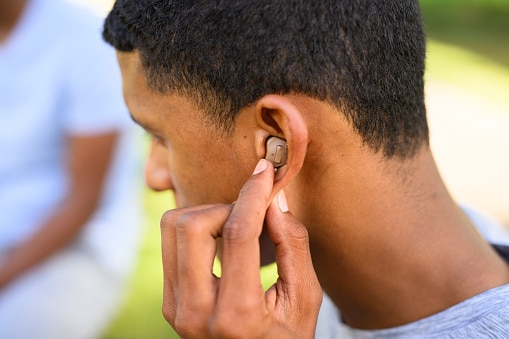
Hearing aids can be excellent sound masking devices in two major ways. First, their amplification can create natural sound masking, and, better yet, you can adjust or even turn off the background noise suppression to give you more control over what you’re hearing as ambient noise. Second, many modern hearing aids have tinnitus sound masking programs available, meaning they can play audio of white noise directly into your ear.
Stimulating the Brain
If you suffer from tinnitus, you probably know that it can appear louder or more intense when you’re in a quiet environment or when you’re bored. This is because there’s nothing stimulating the brain, and without something to focus on, it focuses more on the perceived sounds of tinnitus.
Hearing aids bring more auditory information into the brain, giving it more to focus on and therefore shifting its focus away from tinnitus.
Treating Hearing Loss
Tinnitus often occurs with hearing loss; approximately 90% of people with tinnitus also have hearing loss. One theory for why they occur together so often is that the brain is trying to compensate for missing auditory information. It notices that it’s not hearing as much as it should and tries to fill in the gaps.
Instead of letting the phantom ringing of tinnitus fill in the gaps, hearing aids can fill them with actual auditory information, restoring normal brain functions.
How to Get Started
If you have hearing loss and are already a hearing aid user, talk to your audiologist at your next appointment about how your hearing aids can help with tinnitus. Ask about sound masking programs, background noise suppression and custom settings for quiet environments. As your partners on your hearing health journey, we’re more than happy to help customize your hearing aids to your needs.
If you aren’t currently wearing hearing aids and you’re interested in their potential to help with tinnitus, schedule a tinnitus consultation with us at San Diego Hearing Center. We’ll discuss your symptoms and possible tinnitus management strategies, including hearing aids, that might work for you, and conduct a hearing test and examination of your auditory system. Call us today to make an appointment.
If you’re unsure if you need an appointment but want to learn more about tinnitus management and hearing aids, call our front office! We’re available to answer any of your questions.